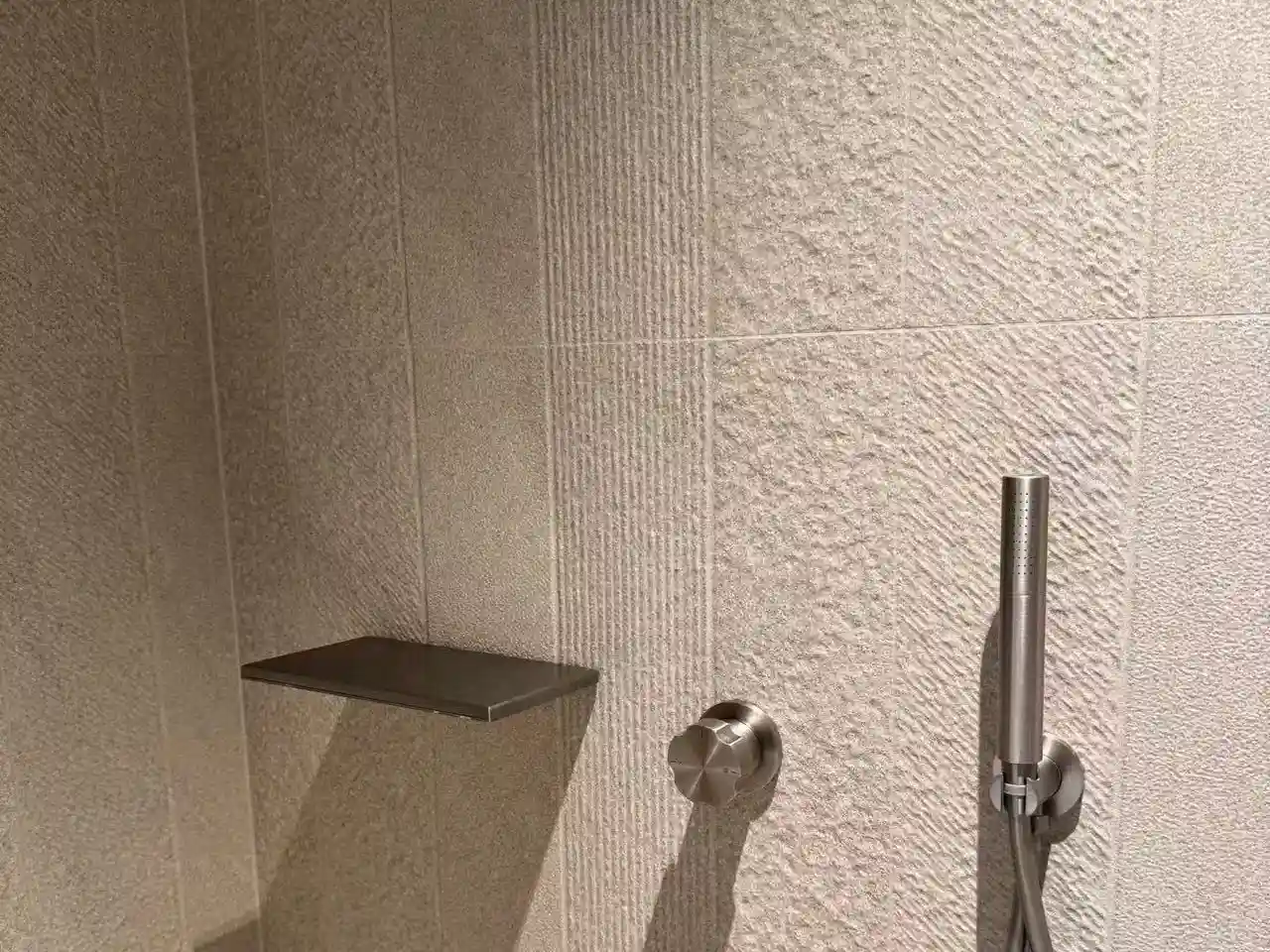
China bathroom tile is a common choice for distributors and project buyers because it combines scale, variety, and mature export logistics. The best results come from clear standards, clear slip targets, and clear packing rules.
Why Source Bathroom Tiles from China? Quality, Design Range, and Cost Advantages
China remains the world’s biggest ceramic tile producer and the top exporter by volume, so buyers can usually find many designs, sizes, and price tiers in one country.
In 2024, China produced about 5.91 billion m² of tile, while installed capacity was about 12.21 billion m², so low-end price competition is real, but the best factories also invest in higher productivity and better service.
A sourcing hub like Foshan works like an industrial cluster, so suppliers and service providers sit close together, and that setup reduces “hidden costs” like slow sampling and slow reorders.
Many experienced buyers now treat “China bathroom tile” as a quality-and-delivery decision, not only a low-price decision.
Porcelain vs Ceramic Bathroom Tiles: Key Differences in Water Absorption & Durability
Most standards define porcelain as a fully vitrified tile with water absorption at or below 0.5% (Group BIa in ISO 13006), and this definition also appears in North American standards and guidance.
North American testing commonly ties the porcelain threshold to ASTM International C373 water-absorption testing.
A tile body with lower absorption is usually denser and more moisture-resistant, so porcelain is often the safer default for bathroom floors and wet shower zones, while higher-absorption ceramic bodies are more common on walls where water does not sit for long periods.
Best Tile Finishes for Bathrooms: Matte vs Polished vs Textured (Cleaning & Safety Trade-offs)
-
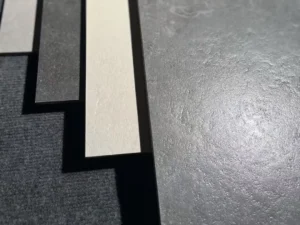
Matte finish: Matte bathroom tile reduces glare, and it often hides water spots better than high gloss. Many 2025–2026 collections push ultra-matt and microcement-like looks, so buyers can get a “soft” visual without needing a glossy surface. Buyers should still ask for wet slip data because a matte look does not guarantee high wet traction.
-
Polished finish: Polished and high-gloss tiles reflect light, so the tiles can make a small bathroom feel brighter. These surfaces can feel more slippery when soap water sits on the tile, so many specs limit polished tiles to bathroom walls or dry zones and keep safer finishes for floors. A buyer should require wet slip testing before approving a polished tile for any wet-walk area.
-
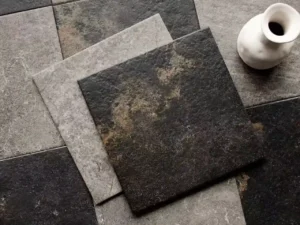
Textured finish: Textured or structured finishes can improve traction because the surface adds grip and can help break the water film. Deep textures can trap soap scum and mineral buildup, so cleaning effort often rises when the pattern is aggressive. Many buyers use light texture for bathroom floors and keep heavy 3D texture for feature walls.
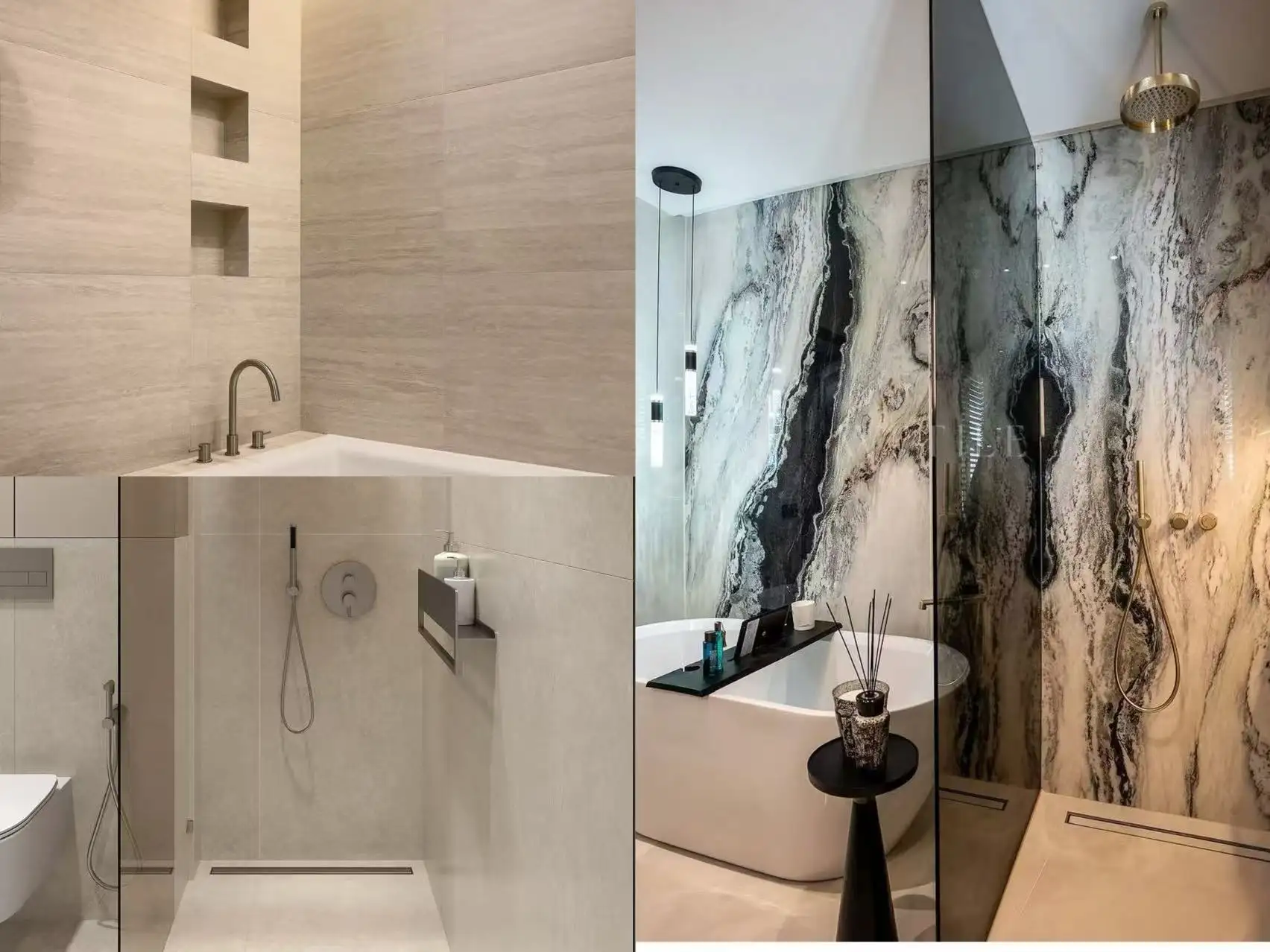
Slip Resistance for Bathroom Floor Tiles: R-Ratings, DCOF, and What’s “Safe” for Wet Areas
-
R-Ratings (ramp test, shod feet): Many European specs use ramp-test classes (R9 to R13), and higher classes mean higher slip resistance under the test method. Modern guidance often treats R classes as “walked in shoes” data, and it separates that from barefoot wet-area testing. Buyers should treat R ratings as one input, because bathrooms include water, soap, and real cleaning chemicals.
-
DCOF (ANSI wet traction): American National Standards Institute A137.1 requires a minimum wet DCOF1 of 0.42 for tiles that are recommended for level interior spaces expected to be walked on when wet.
The DCOF test compares surfaces under controlled conditions, and it cannot predict every slip because real-world risk changes with contaminants, traffic, and maintenance. -
What is “safe” for wet bathroom areas?: Safety depends on the user, the contaminants, and cleaning habits, so a “pass” value does not make a tile slip-proof.
For barefoot wet zones, DIN 51097 Class B explicitly covers showers, so buyers can use “Class B + wet DCOF data + finish choice” as a practical decision set.
Many export-focused buyers also set a higher internal target than the minimum and require wet (not only dry) reports to reduce on-site risk.
Bathroom Tile Size Guide: Most Requested Sizes for Walls, Floors, and Showers
-
Walls: Many wholesale bathroom wall programs center on 300×600 mm and 600×1200 mm because the rectangle fits most layouts and reduces grout lines. Larger wall tiles support a “seamless” look, and many designers prefer minimal grout lines in wetroom-style zones. Buyers should align size choice with installer skill because bigger tiles need better wall flatness and better lippage control.
-
Floors: 600×600 mm remains common because installers can control waste and cuts, and the format still looks modern. Many projects also use 600×1200 mm on floors because fewer grout joints often means easier cleaning, but the slab must be flat and the slip rating must still fit the wet use. Buyers should treat floor traction data as non-negotiable because bathroom floors get wet by design.
-
Showers: A shower floor needs slope to the drain, and plumbing codes often require about 1/4 inch per foot in a stall shower, so small tiles or mosaics are easier to fit to the slope.
Small-format tiles also increase grout joints, and many technical notes say joints can improve slip resistance in wet areas.
Many buyers keep shower walls consistent with the main bathroom wall tile, but buyers choose a smaller, higher-traction piece for the shower floor.
Large-Format Bathroom Tiles: Why 600×1200 Is Popular (Fewer Grout Lines, Bigger Look)
600×1200 mm is popular because the size reduces grout lines, and that change often makes the bathroom look bigger and simpler.
This size can also reduce grout-cleaning work in hotel bathrooms and apartment bathrooms because grout is the area that traps stains and soap scum first.
Large-format tile needs a flatter substrate, and industry guidance treats tiles over 15 inches on one side as “large format,” with tighter flatness expectations for installation success.
Many buyers reduce risk by using 600×1200 on walls and dry floors, and they keep smaller, more slip-resistant pieces for the shower floor.
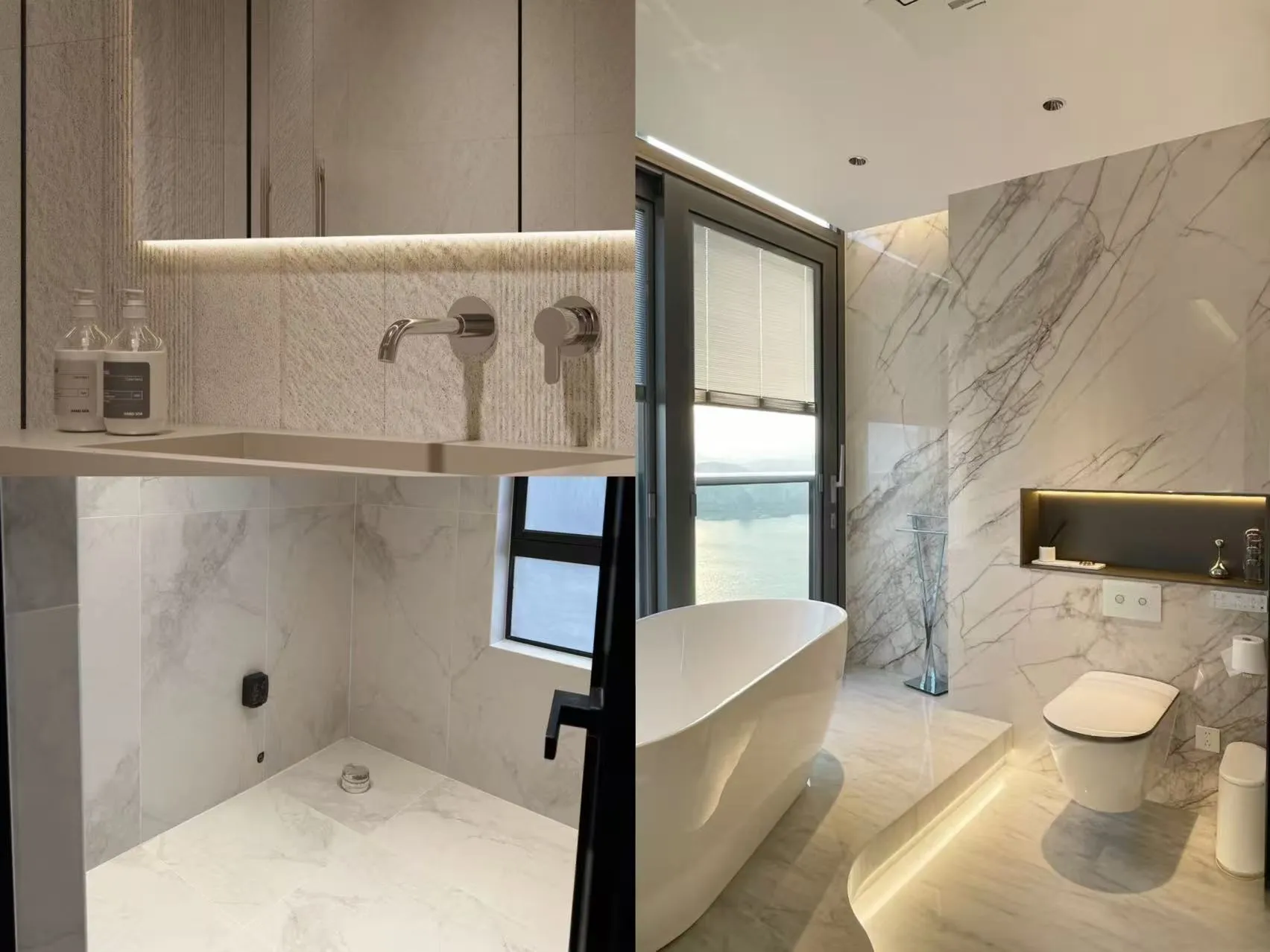
Porcelain Slab Tiles for Bathroom Walls: When 1200×2400 Makes Sense
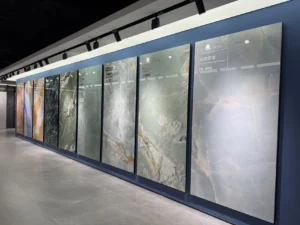
1200×2400 mm panels make sense when a project wants a near-seamless wall with very few joints, like behind a vanity or across a shower feature wall.
In ANSI/TCNA terms, tile panels/slabs are products with at least 1 m² facial area, so 1200×2400 mm clearly fits that category and follows different product and installation standards than normal tile.
Thin slab installation needs special handling and special techniques because thin panels are often around 3–6.5 mm thick, and breakage risk rises when crews handle them like standard-body porcelain.
A buyer should plan for crates or A-frames, lifting tools, and site access because long panels are hard to carry through tight corridors and small elevators.
Bathroom Tile Trends 2026: Colors, Textures, and “Tile Drenching” in Modern Bathrooms
-
Colors: Many 2026 bathroom palettes lean toward warm neutrals and earthy tones, and designers often pair beige, terracotta, and warm stone looks with minimal grout lines.
Buyers can use these palettes to reduce “trend risk” because warm stone looks also fit hotels and apartments that want a long lifecycle. -
Textures: Texture is a key theme for 2026, and many designers want tiles that feel tactile, show relief, or look handmade.
Trade-fair trend reports also highlight ultra-matt and “ultra-realistic” stone and microcement looks, so buyers can get a textured feel without choosing deep 3D surfaces that are hard to clean. -
Tile drenching: Tile drenching uses the same shade of tile on both the floor and the walls to create an immersive bathroom look.
This trend often works best when the buyer uses a limited grout color range and stable batches, because the whole room depends on color consistency.
Project Use Cases: Bathroom Tiles for Hotels, Apartments, and Commercial Restrooms
-
Hotels: Hotels need stable supply, consistent calibration, and repeatable installation, so porcelain bodies and clear slip targets reduce maintenance risk across many rooms.
Many hotel specs prefer large-format walls for fewer grout lines, but many specs still keep smaller tiles for shower floors to help slope and traction. -
Apartments: Apartments often need fast installation and predictable cost, so standard sizes like 300×600, 600×600, and 600×1200 simplify planning and reorders.
Large-format wall tiles also help landlords because fewer grout joints often means easier cleaning between tenants. -
Commercial restrooms: Commercial restrooms need easy cleaning and clear slip performance because staff clean the floors often and users track in water.
Workplace guidance often places toilets at a lower shod-foot slip group than washrooms, but the correct choice depends on the cleaning chemistry and the wet exposure in that restroom.

Shipping Bathroom Tiles from China: Pallet Packaging, Container Loading, and Damage Prevention
-
Pallet packaging: Most export bathroom tile shipments use cartons on pallets, then straps and wrapping to lock the stack.
If a shipment uses wood pallets, many countries expect ISPM 15 compliant wood packaging material, and the standard explicitly covers pallets and marks treated wood packaging with an official stamp. -
Container loading: Tile is dense cargo, so orders often hit container payload limits before they fill the container by volume. A standard 20’ GP container can carry around 28,130 kg payload, and a 40’ GP container can carry around 28,750 kg payload, so buyers should choose the container type based on weight planning, not only space.
Loaders should spread weight and keep the center of gravity low, and loaders should never exceed the payload marked on the container. -
Damage prevention: Export breakage risk usually comes from movement, strap tension, and weak pallet stability, so a stable pallet matters as much as a strong tile.
Many packaging systems use horizontal and vertical strapping plus edge protectors because edge protectors reduce cracking that strap tension can cause on large-format cartons.
Buyers can also request full pallet wrapping or stretch-hood protection when the route includes humid storage or long port dwell time.
Looking for a reliable China bathroom tile supplier? Contact Miller at miller@kingsuntile.com for professional sourcing support.
FAQ
Q1. What is the MOQ for wholesale bathroom tiles from China?
MOQ depends on whether you buy in-stock items or you request a custom series. Many China bathroom tile exporters set MOQ at one 20’ container (FCL) per order, while some suppliers list trial MOQs around a few hundred square meters per design. Buyers should treat MOQ as a logistics and batching decision, not only a pricing lever.
Q2. Can I get samples before placing a bulk order? How long does it take?
Yes. Most factories can send samples before a bulk order. The supplier usually needs the selected design code, surface finish, and edge detail, then the team prepares a cut sample or full tile and ships it by courier. Express shipping can be as fast as 1–3 days and air freight is often 3–10 days, but the lane and customs still matter.
Q3. How do I confirm a tile is real porcelain (not just “porcelain labeled”)?
You should ask for a water-absorption test report for the exact SKU. Real porcelain is defined at ≤0.5% water absorption when tested using ASTM C373, and ISO 13006 also places porcelain in the ≤0.5% group (BIa).
Q4. What slip rating should I choose for bathroom floors and wet areas?
For U.S.-style specs, a bathroom floor tile that may be walked on wet should meet ANSI A137.1’s minimum wet DCOF of 0.42, tested per ANSI A326.3. For European-style ramp tests, R-ratings (R9–R13) describe shod slip resistance, but showers are barefoot wet areas, so DIN 51097 Class B is a practical reference. No rating makes any floor “slip proof,” so cleaning and mats still matter.
Q5. What’s the typical lead time and shipping time for bathroom tiles from China?
Lead time depends on stock and customization. Many tile exporters quote about 7 days for in-stock delivery, and roughly 15–25 days after deposit for made-to-order production. Sea freight times vary by route, but Southeast Asia lanes are often about 9–12 days, and many routes fall in a broad 12–35+ day range. Holidays and port congestion can extend both timelines.
Q6. How do you prevent tile breakage during container loading and ocean shipping?
Breakage control starts with packing, then continues with loading. Strong cartons, palletizing, tight horizontal/vertical strapping, and edge protectors reduce cracks from strap tension and vibration. Loaders should spread weight, keep the center of gravity low, block gaps, and never exceed container payload limits. For wet destinations, stretch-hood or full pallet wrapping also helps protect the pallet from moisture and dust.