Outdoor tiles (also known as outside tiles) refer to tiles specifically designed for exterior use. They are built to withstand weather conditions, temperature changes, and outdoor elements like rain, sun, and freeze-thaw cycles. Compared to standard interior tiles, outdoor tiles tend to be thicker and more durable, providing better strength and slip resistance1slip resistance for high-traffic exterior areas. From family patios in the United States to expansive courtyards in China, outdoor tiles have become a cornerstone of modern exterior design, valued for their ability to endure harsh conditions while maintaining visual appeal.
What is an outside tile?
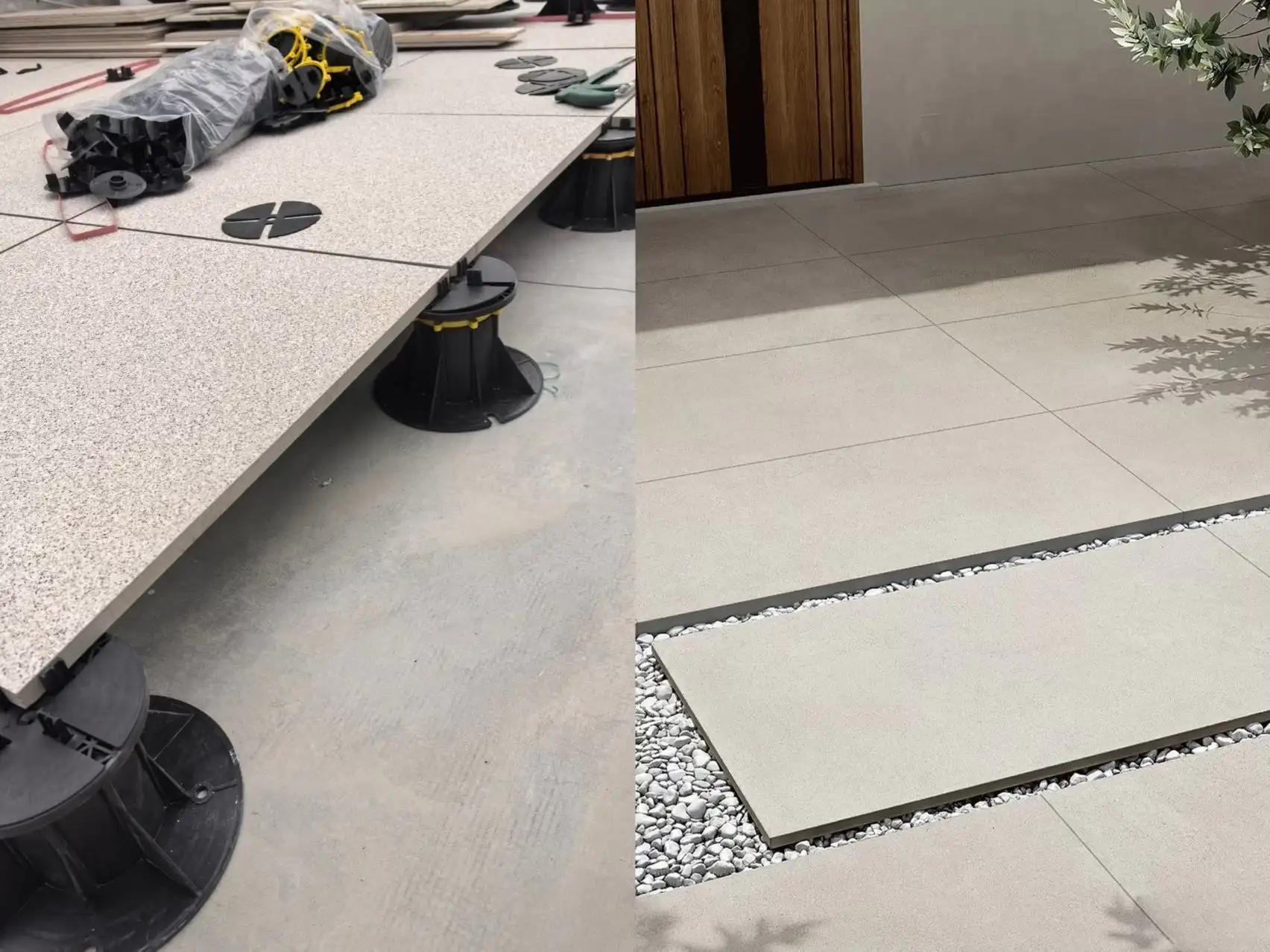
An outside tile (or outdoor tile) is a tile manufactured for use in open-air environments such as patios, garden paths, balconies, and pool decks. Unlike indoor tiles, outside tiles are formulated to handle extreme temperatures, moisture, and heavy wear without cracking or fading. They typically have a very low water absorption rate and are often textured or treated to be slip-resistant for safety when wet or icy.
Common materials for outdoor tiles include porcelain, natural stone, concrete, and certain durable ceramics, each offering distinct performance benefits. Porcelain is especially popular because its dense, impervious body (water absorption <0.5%) makes it highly resistant to moisture damage and freeze-thaw cycles. In essence, an outside tile is any tile rated for exterior use – meaning it can endure rain, sun exposure, and temperature fluctuations – all while providing a functional, attractive surface for outdoor living spaces.
What kind of tile is best for outdoor use?
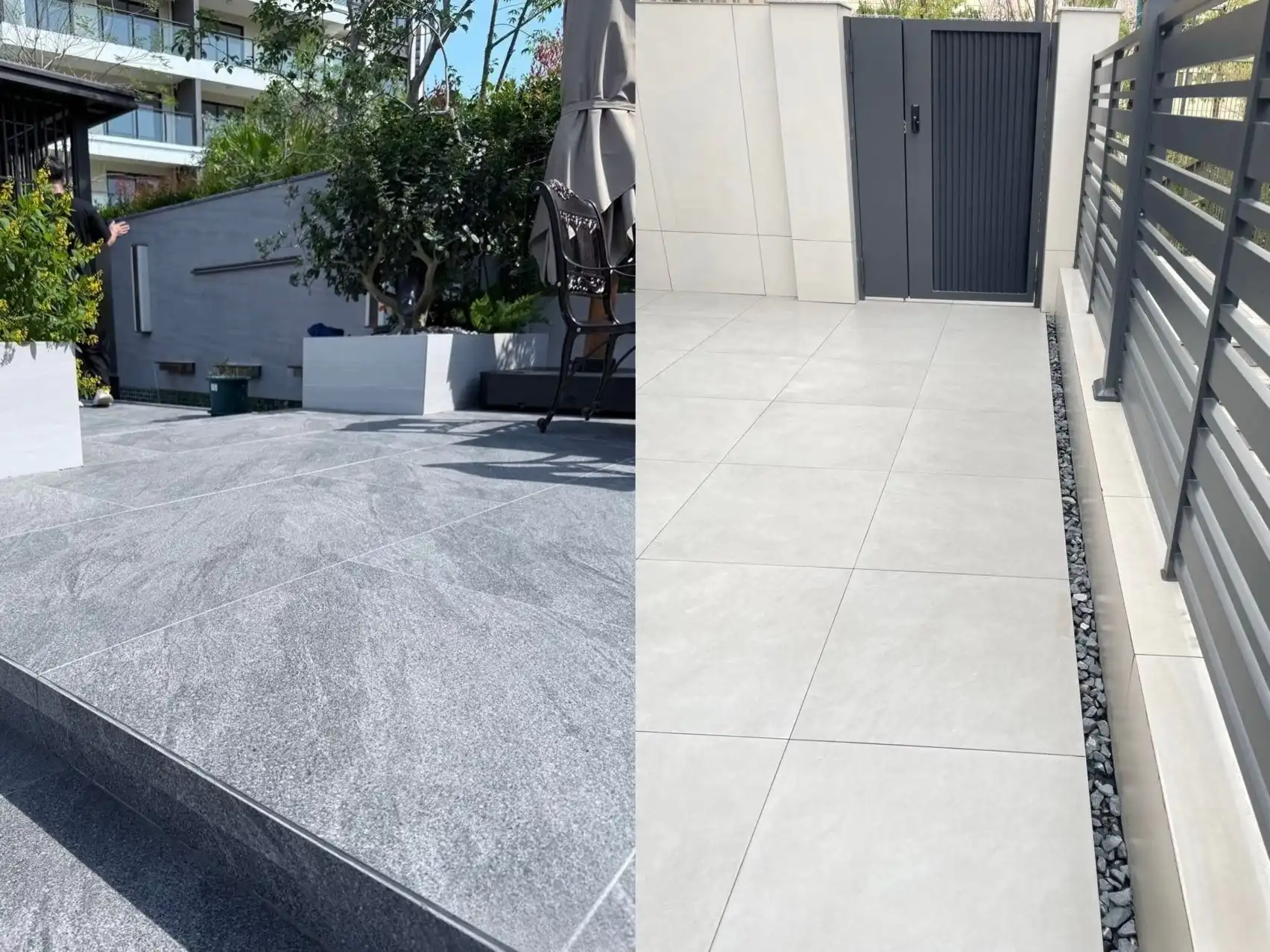
When it comes to the best kind of tile for outdoor use, porcelain tiles are widely regarded as the top choice. Porcelain is a type of ceramic fired at very high temperatures, resulting in an extremely dense and water-impervious tile. This frost-proof quality2 means porcelain won't absorb water that could freeze and crack the tile in cold weather. Porcelain outdoor tiles also require minimal maintenance, resist fading and scratching, and often come with built-in textures for slip resistance – qualities ideal for exterior applications. In fact, many suppliers (including leading manufacturers in China) focus on porcelain for outdoor tile collections due to its reliable performance in varied climates.
Natural stone tiles (like slate, granite, travertine, or limestone) are another excellent outdoor option, prized for their organic beauty and strength. Stone can excel on patios and pathways, but usually needs sealing to enhance water resistance and prevent stains. Concrete pavers and quarry tiles (unglazed clay tiles) can also be used outdoors; they tend to provide good slip resistance and a rustic look, though they may be more porous or prone to slight color changes over time.
Standard indoor ceramic tiles, on the other hand, are generally not recommended outside because they absorb more water and can crack during freeze-thaw cycles. Always look for tiles explicitly designated for exterior use – these will have the necessary durability and safety ratings. In summary, porcelain outdoor tiles are often the best all-around choice for patios and gardens, with natural stone a close second for those who prefer a natural look (provided it’s properly maintained).
Can I lay 10mm porcelain tiles outside?
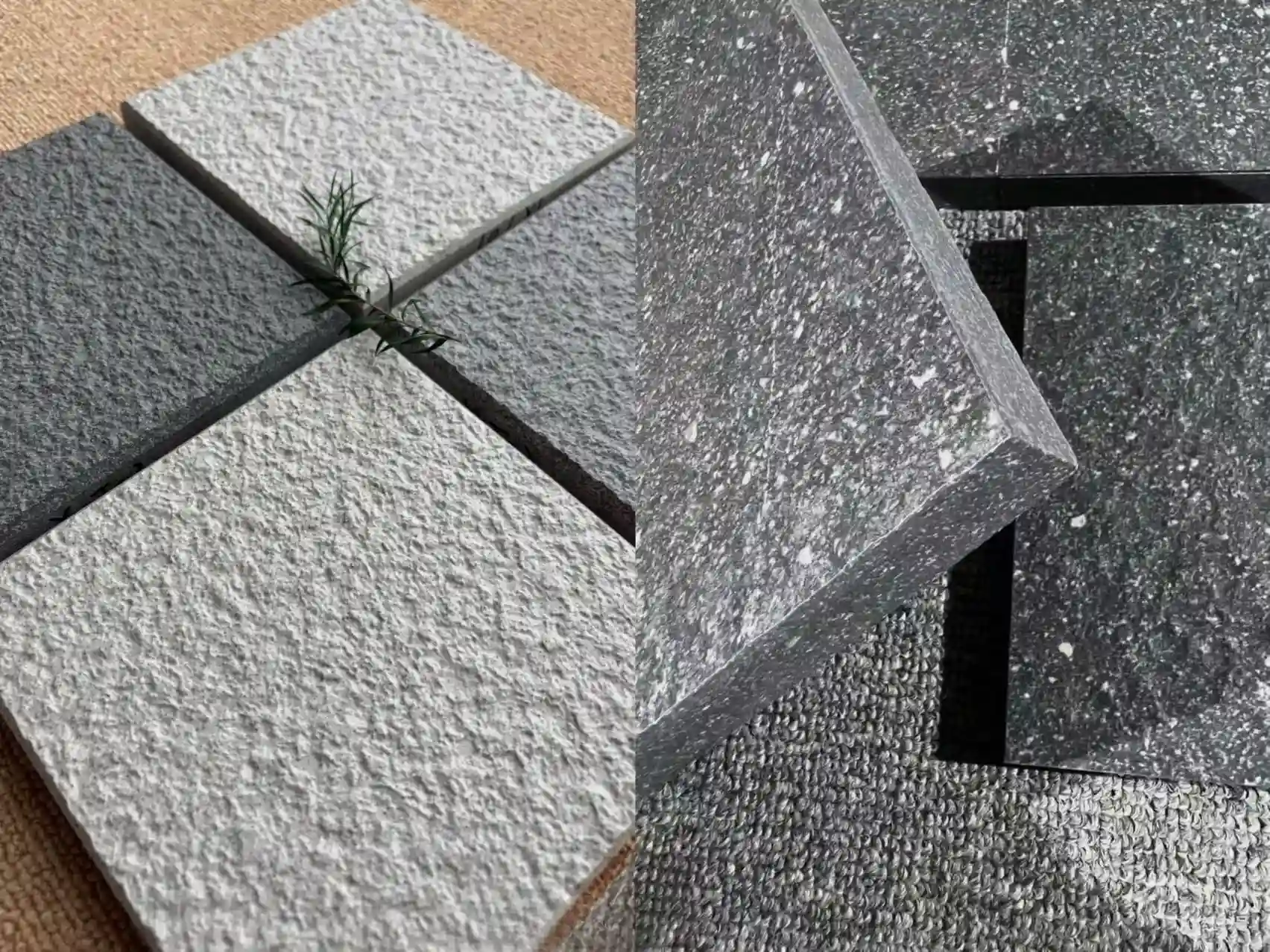
Yes, you can lay 10mm thick porcelain tiles outside in theory, but strict installation guidelines must be followed for a lasting and safe result. Standard 10mm porcelain tiles are typically produced for indoor floors, yet some homeowners do use them on outdoor patios. The key is to install them on a solid, fully supporting base. This usually means laying them on a reinforced concrete slab or cement screed with a high-quality adhesive, ensuring 100% coverage (no voids beneath the tile) to prevent weak spots. Additionally, the tile should have a sufficient anti-slip surface (generally an R11 slip resistance rating or higher is recommended for outdoor areas) to avoid slipperiness when wet.
However, even with proper installation, 10mm tiles are less ideal for exterior use than thicker paver-grade tiles. Outdoor porcelain pavers are commonly 20mm thick (about 3/4 inch) for good reason. A 20mm tile is roughly five times stronger under load than a 10mm tile and far more resistant to cracking. Thicker outdoor tiles handle heavy furniture, foot traffic, and impacts much better, and they are usually manufactured with rougher, slip-resistant surfaces specifically for outdoor safety. They are also the only choice if you plan to use pedestal support systems or want to dry-lay tiles on sand/gravel, which 10mm tiles cannot handle.
In short, while you can use 10mm porcelain tiles outdoors by adhering them to a solid substrate (many people have done so successfully for light-use patios), you should proceed with caution. Be sure to use a rated exterior adhesive, ensure adequate drainage, and understand that 20mm outdoor porcelain tiles will perform much better long-term for most exterior projects.
Can I use normal tiles outside?
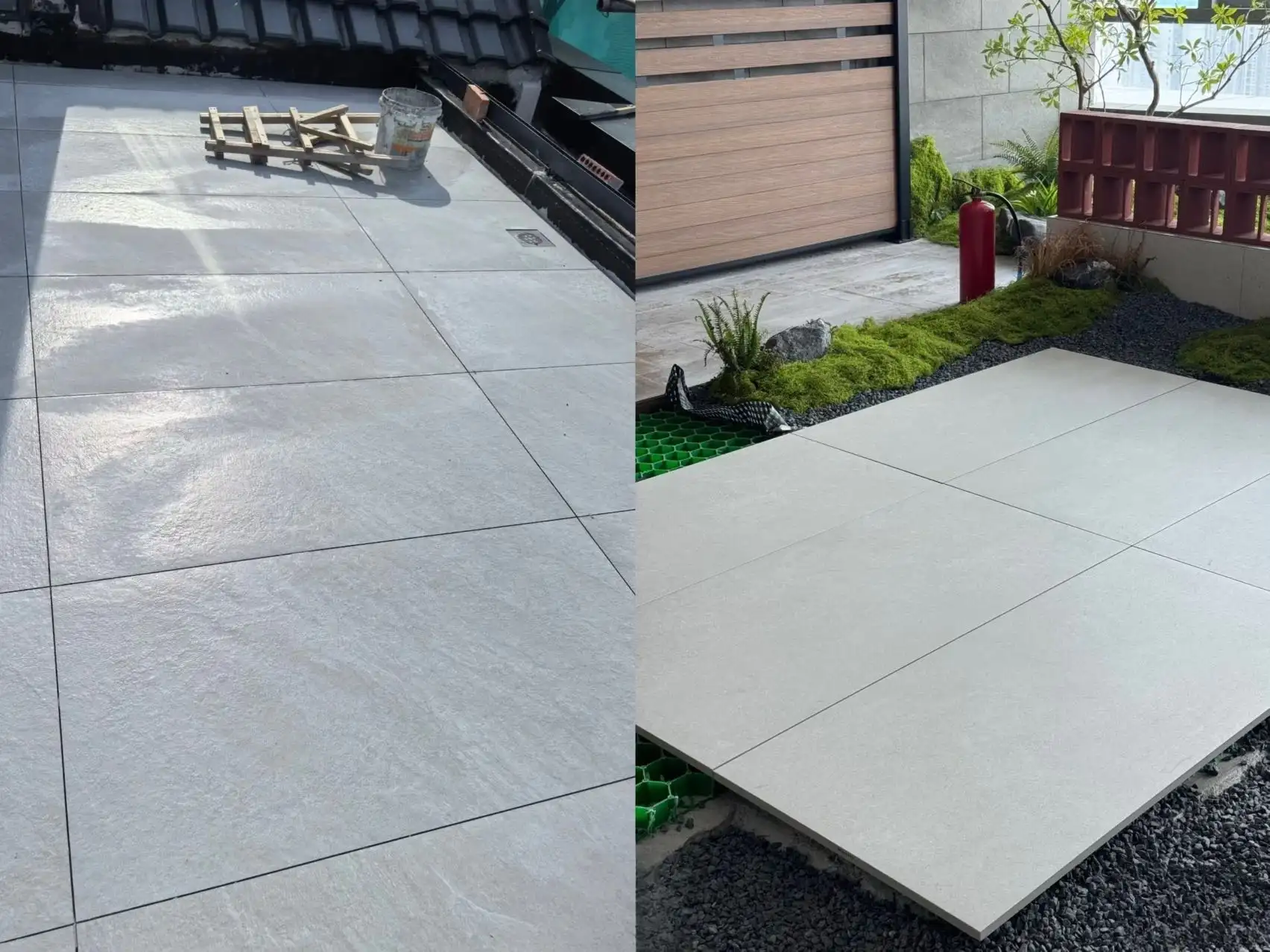
Using “normal” indoor tiles outside is generally not advisable unless those tiles are explicitly rated for outdoor use. The term “normal tiles” often refers to typical indoor ceramic tiles or glossy glazed tiles that one might use in a kitchen or bathroom. These standard tiles usually have higher water absorption and smoother finishes, which pose problems outdoors.
Moisture is enemy number one for tiles in an outdoor setting – if a tile absorbs water and temperatures drop, that water can freeze and cause the tile to crack or pop off the surface. Indoor tiles (especially porous ceramics or low-fired tiles) tend to soak up more moisture, meaning they are likely to fail in climates with rain or freezing conditions. In contrast, outdoor-grade tiles like porcelain are vitrified (impervious), so they won't crack from frost.
Another issue is slip safety. Normal indoor tiles often have a glossy or smooth glaze not meant to get wet or muddy. When used outside, such tiles can become extremely slippery and hazardous with rain or algae growth. Outdoor tiles are manufactured with textured or matte surfaces to provide traction (for example, many outdoor porcelains have an R11 anti-slip rating or higher). If you put a regular indoor tile on a patio, it may lack this grip and create a slip-and-fall risk when wet.
There are some cases where a “normal” tile could be used outdoors – for instance, a covered porch in a mild climate, where it never freezes and the tile stays mostly dry. However, even then it’s wise to choose tiles marketed as outdoor or exterior-grade. These will be labeled as frost-resistant, usually porcelain or fully vitrified materials, or specific natural stones known to handle the elements.
In summary, do not use ordinary indoor tiles outside unless you are certain they meet the requirements for outdoor exposure. Always check the tile’s specifications for water absorption, frost resistance, and slip rating. It’s best to stick with tiles designed for outdoor use to ensure safety and longevity.
How thick should outdoor tiles be?
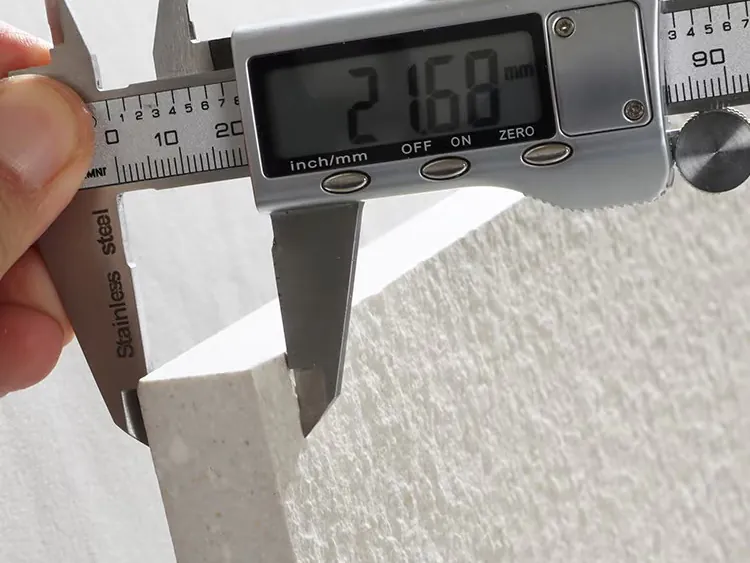
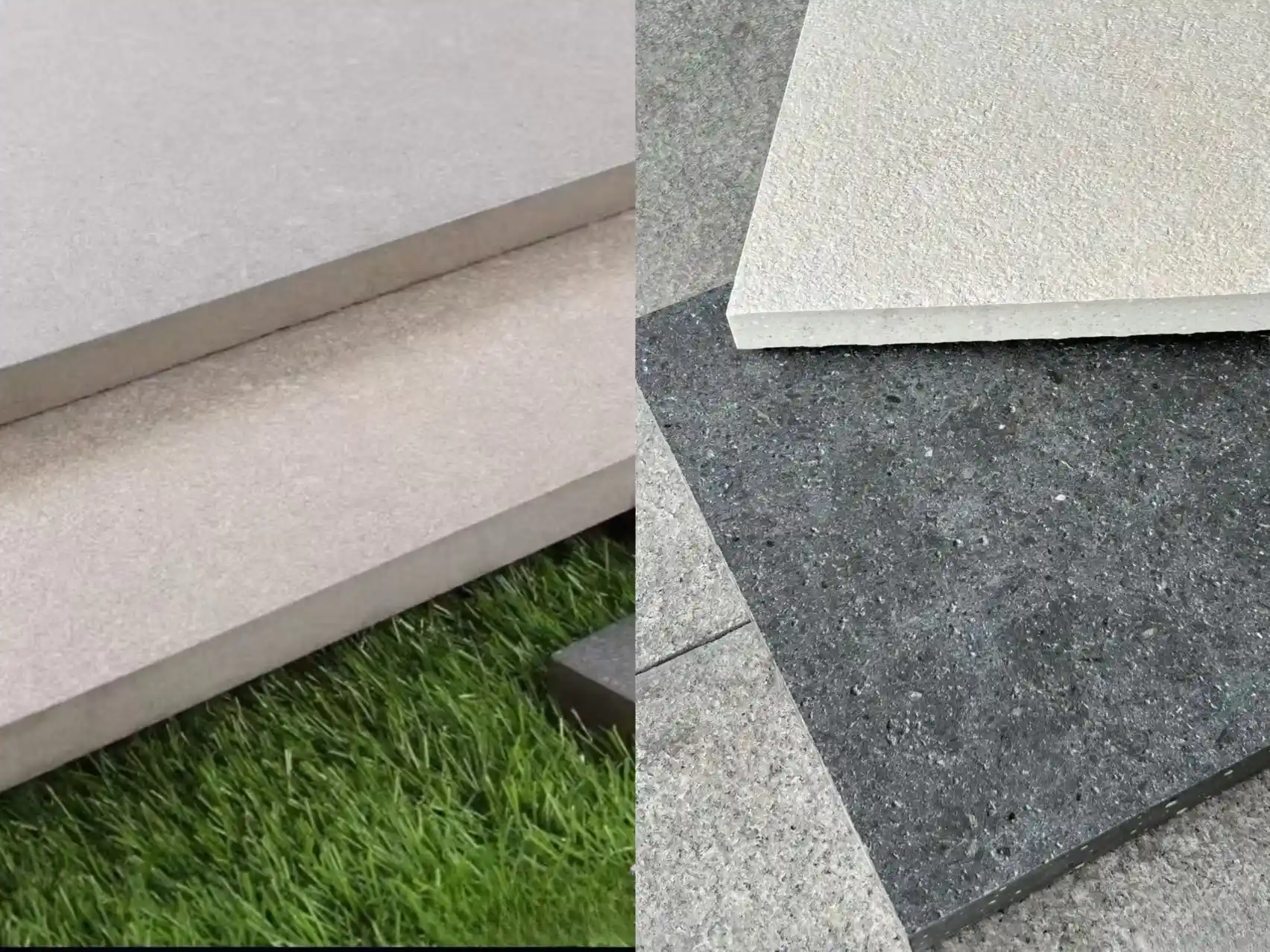
Outdoor tiles should be considerably thicker than most indoor tiles to ensure they can withstand external stresses. The ideal thickness for outdoor porcelain tiles (often called porcelain pavers) is about 20mm (2 centimeters). At this thickness, the tiles have the structural strength to endure heavy foot traffic, patio furniture, grills, and even vehicles in some cases. They are less likely to crack or break under pressure and can handle the minor unevenness in outdoor substrates.
By contrast, indoor floor tiles are commonly in the 8–10mm range (around 1 centimeter thick) and are not built to take the same level of abuse. As noted above, 10mm porcelain can be used outside if bonded to concrete, but a 20mm tile will be far more durable and is specifically engineered for outdoor environments.
The reasoning comes down to both strength and design. A thicker tile simply has more body to resist impact or bending. Moreover, outdoor tiles often serve as part of a drainage system – for example, 20mm porcelain pavers can be installed on risers (pedestals) with gaps that allow rainwater to drain underneath. Only tiles of sufficient thickness and strength will work in such applications.
Many manufacturers produce matching indoor/outdoor tile ranges, where the indoor version is ~10mm thick and the outdoor version is 20mm with identical surface design. The outdoor 20mm tiles typically also have rougher textures for slip-resistance and are rated frost-proof, completing the package for external use.
In some specialized scenarios (commercial plazas, driveways, etc.), you might even see outdoor paving tiles 30mm or thicker, especially if natural stone is used. Thicker slabs provide extra load-bearing capacity for vehicular traffic or heavy loads. For a standard home patio or garden path, though, 20mm thick porcelain tiles are the sweet spot – offering ample strength and longevity. In summary, plan for outdoor tiles around 3/4 inch (18–20mm) thick to ensure a robust and long-lasting installation. If you use thinner tiles (10mm), make sure they are fully supported by a solid base and understand there is a greater risk of damage over time.
How long do outdoor porcelain tiles last?
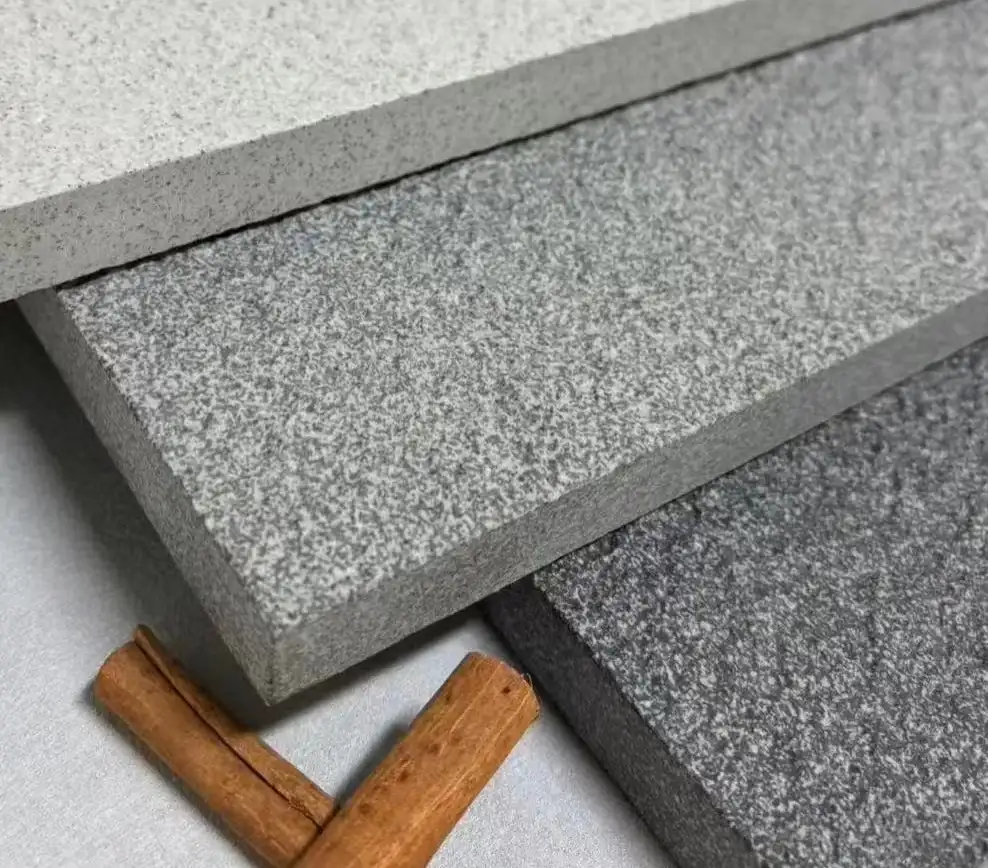
One of the great advantages of porcelain outdoor tiles is their impressive longevity. High-quality outdoor porcelain tiles can easily last for decades when properly installed and maintained. In fact, many manufacturers and contractors report a lifespan of anywhere from 25 to 50 years for porcelain paver tiles in outdoor settings.
Porcelain is an extremely hard-wearing material – it’s resistant to UV rays, so it won’t fade significantly in sunlight, and it’s impervious to water, so it won’t degrade with moisture or succumb to freeze-thaw cracking. This means a well-built porcelain tile patio can look nearly as good in 20 years as it did when first installed, aside from maybe some weathering of the grout or normal wear.
Of course, the actual lifespan depends on a few factors. Climate and conditions play a role: in a mild, dry climate, porcelain tiles could potentially last 30+ years with very little issue. In harsher environments (say, a coastal area with salt air, or a region with severe winters), the lifespan might be on the lower end of the range – perhaps 15–20 years – unless diligent maintenance is performed.
Installation quality is critical as well. Tiles that are laid on a stable base with proper drainage and using appropriate grout/adhesive will far outlast a poor installation. Regular cleaning and upkeep (like removing dirt, algae, or acidic leaves) will also extend the life of the surface.
The good news is that porcelain itself doesn't really “wear out” in terms of structural integrity – it won't rot, and it’s harder to wear down than concrete. You might decide to replace outdoor tiles eventually due to style preferences or minor surface wear, but it's unlikely they will fail catastrophically. Some sources even confidently state that outdoor porcelain paving can last up to 50 years under optimal conditions.
In practical terms, you should expect a solid 20–30 years of use from a porcelain-tiled outdoor area with minimal maintenance, and potentially much longer. This makes outdoor porcelain tiles a cost-effective long-term investment for your patio or garden, outlasting many other outdoor flooring options.
If you have further questions or need high-quality outdoor tiles for an upcoming project, you are encouraged to contact Miller (Get Catalog & Quotation from Miller@kingsuntile.com) for expert assistance and product options.